
BioGames
Small games about the bits of biology I love, made to play in a few minutes. On a keyboard they use Q, A, O and P (up, down, left, right) and Space, as in the old ZX Spectrum games; on a phone or tablet they show touch controls.
For many of us who were children in the 1980s, the ZX Spectrum was our first computer: a small black box with rubber keys that plugged into the family television and loaded its games from cassette tapes, with a few minutes of screeching and coloured stripes before anything happened. I had a 16K one and then a 48K, and from 1982 to 1987 a good many of my weekends went on them. The games were simple and often very hard, and many of us typed our first lines of BASIC on one. These little games are a nod to that time, with cells and molecules in place of spaceships.
The ages are only a guide: younger players can enjoy the action and grow into the words, and none of the games is too young for teenagers or grown-ups.
Molecules and cells
Inside a single cell, where proteins, viruses and organelles go about their work.
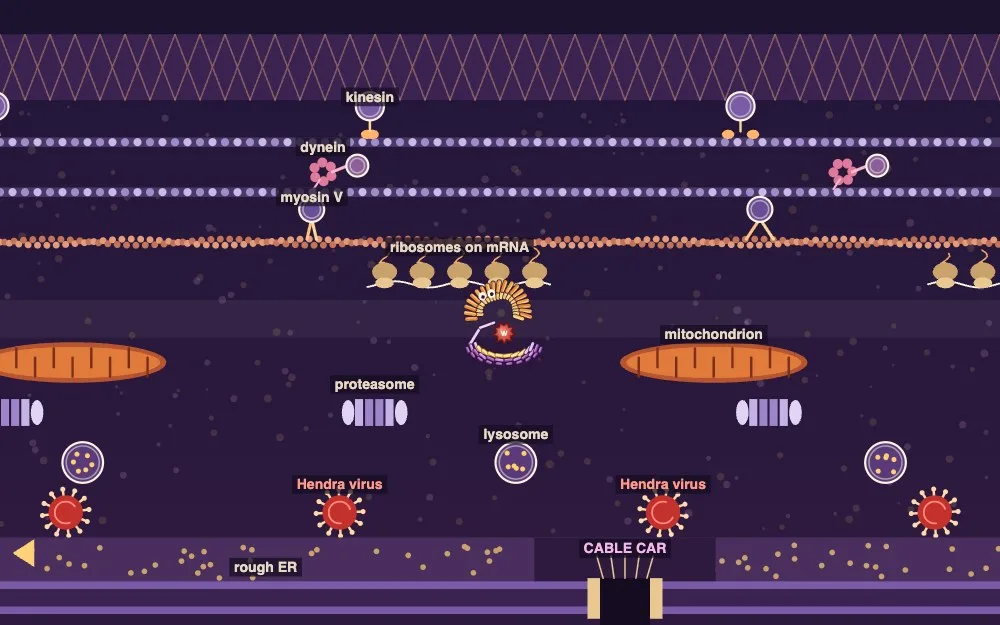
Nuclear Slalom: Importin Run
Be importin β: cross a crowded cytoplasm, pick the right importin α for each cargo, ski down through a nuclear pore to the DNA and ride the cable car back up. Four orders, from ribosome building to a virus fight.
RacingQuizzes and puzzlesFrom age 8
Play →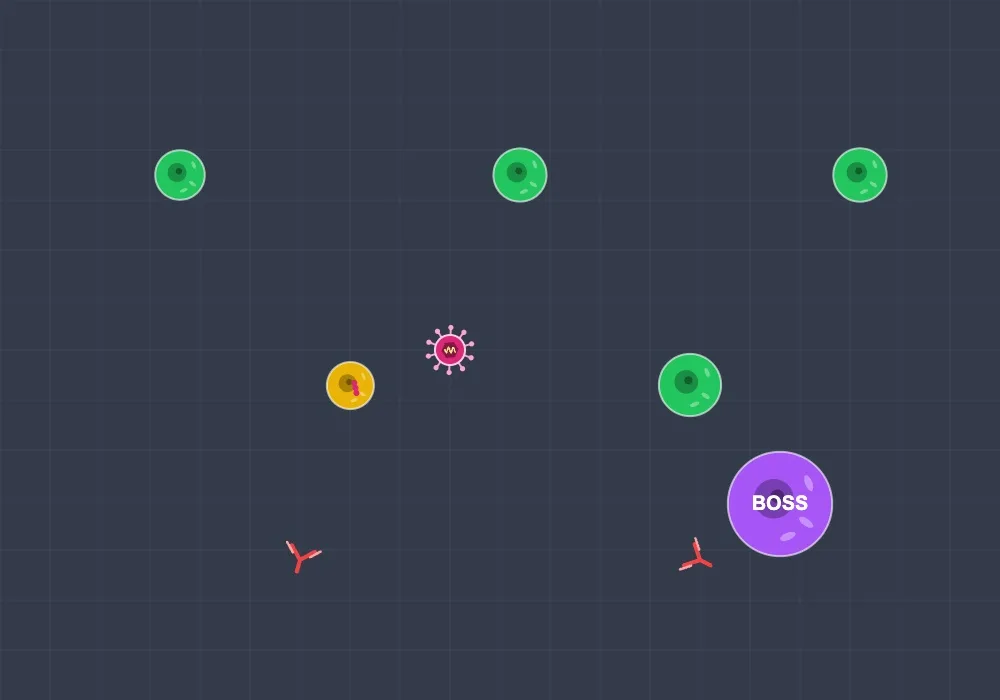
Viral Vector: Biochemistry Arcade
Play the virus for once: infect cells, dodge antibodies and answer biochemistry questions to beat the boss cell.
Fly and dodgeQuizzes and puzzlesFrom age 8
Play →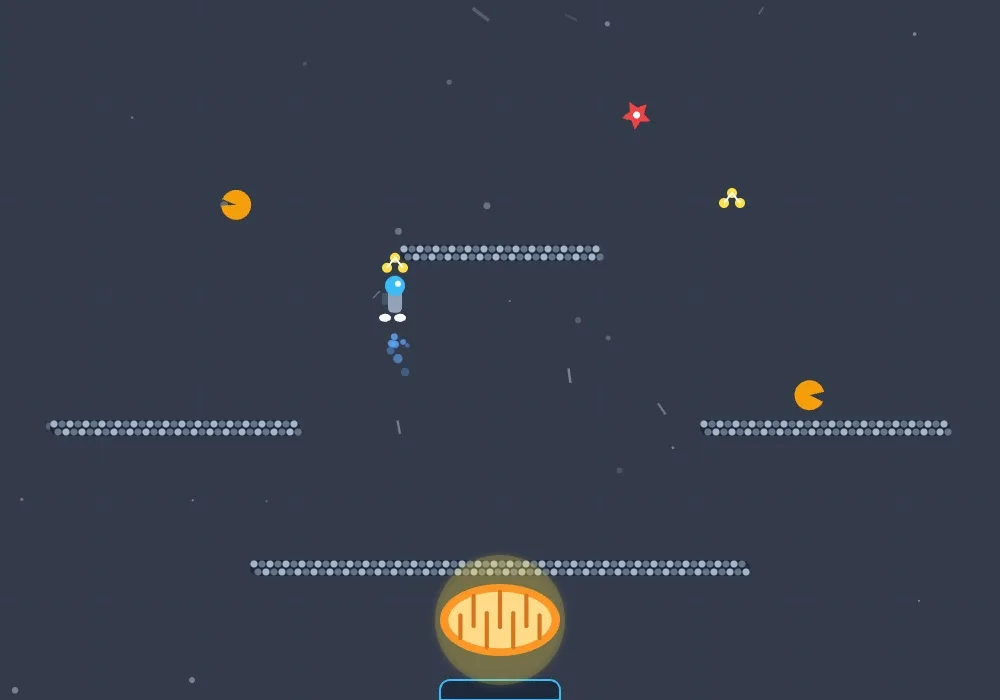
CytoPac: Organelle Assembler
Fly a kinesin-bot around the cytoplasm, build organelles piece by piece and fuel them up.
Shoot 'em upFly and dodgeFrom age 6
Play →Circulation
Travelling round the body: white cells on patrol and red cells delivering oxygen.
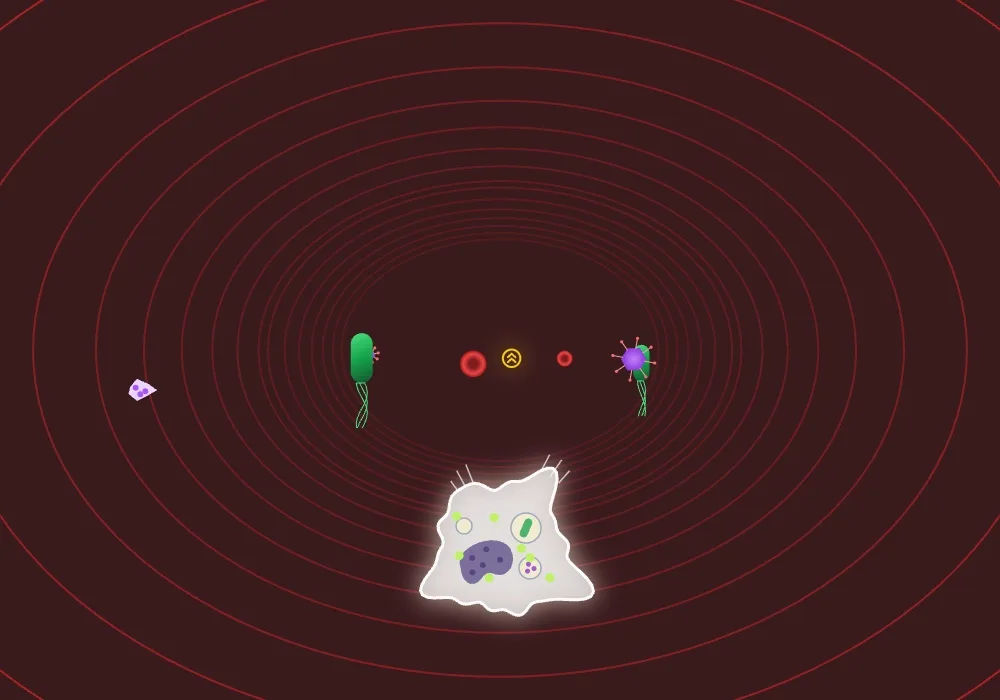
LeukoChase: Bloodstream Racer
Race a macrophage down an artery, through the liver and back in the veins, firing proteases at bacteria and viruses.
Shoot 'em upRacingFrom age 6
Play →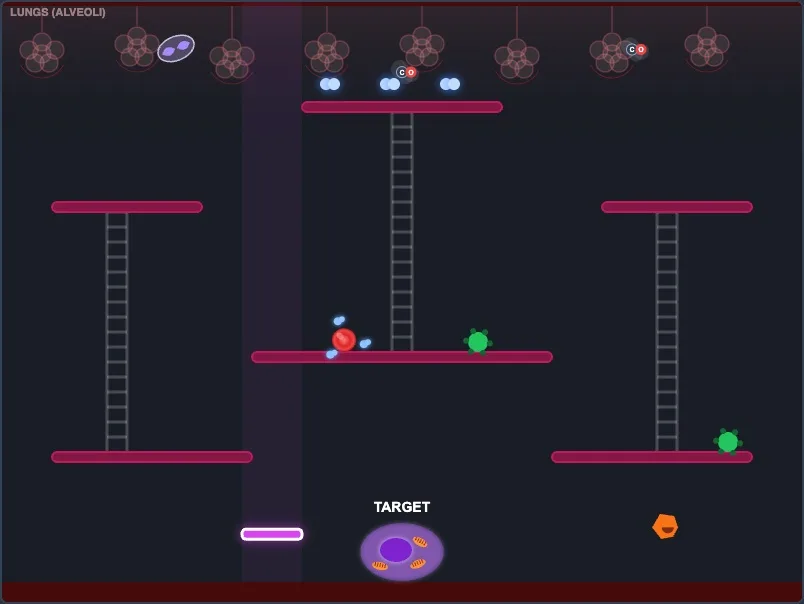
HemoClimb: Oxygen Delivery
Be a red blood cell: climb to the lungs, pick up oxygen and ferry it down to a cell that needs it.
PlatformFrom age 6
Play →The body
Organs and whole systems: from the first race of a new life to the gut, the nerves, the brain and the balance that keeps it all going.
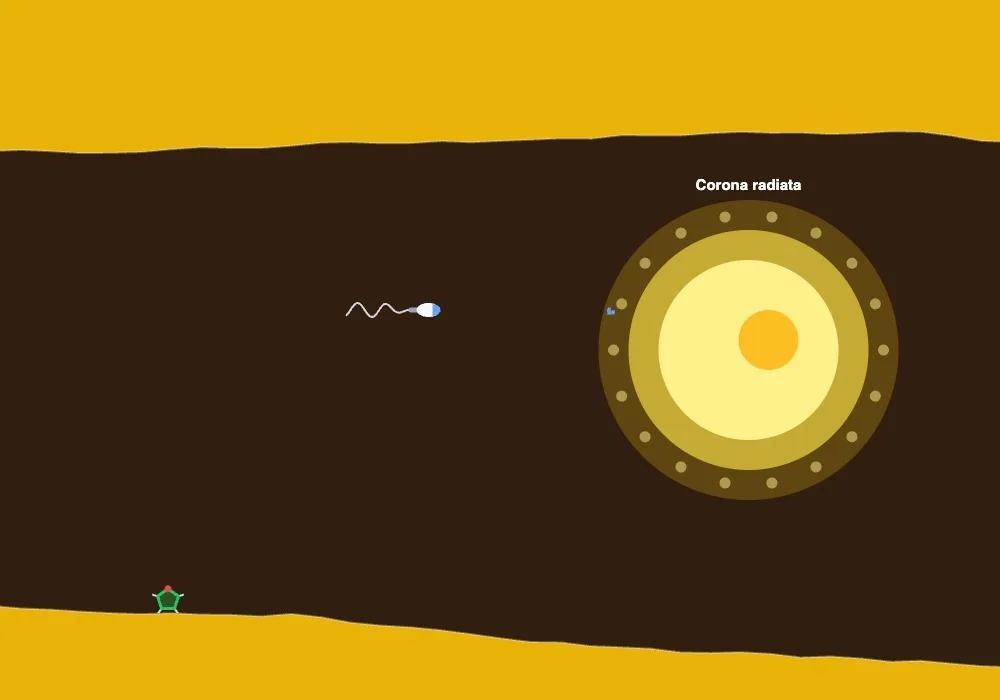
FertiScramble: Fertilisation Race
Guide a sperm cell through the female reproductive tract to the egg, and use acrosomal enzymes to get inside.
Shoot 'em upFly and dodgeFrom age 10
Play →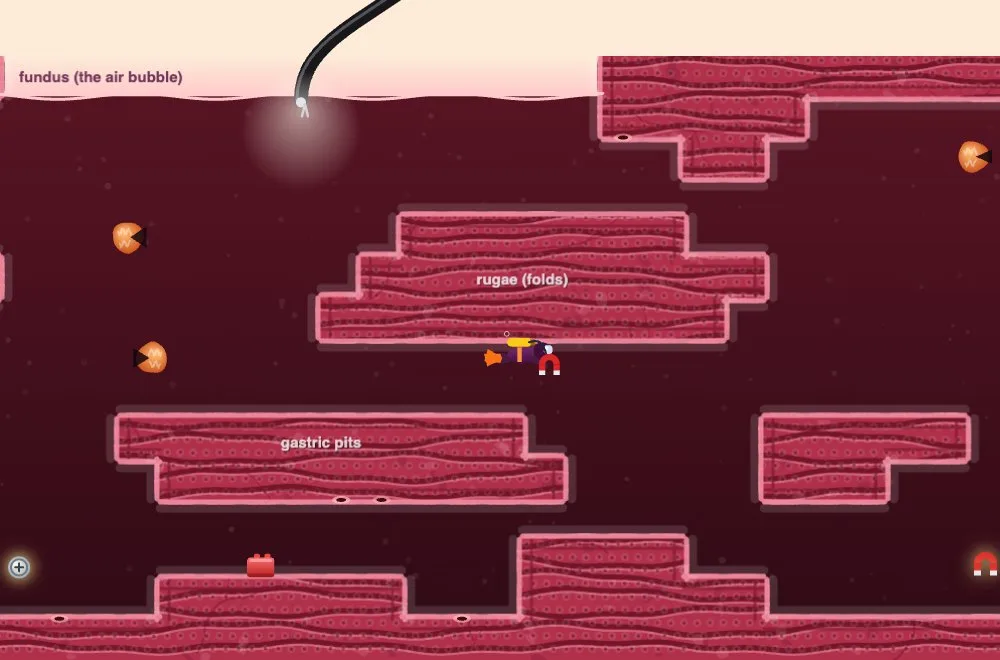
Digestive Dive: Gut Expedition
From the mouth to the exit in six stages: brush away sugar, help an endoscope, digest fat, milk and protein, feed your gut bacteria and see a swallowed toy brick safely out.
Fly and dodgeExploringFrom age 8
Play →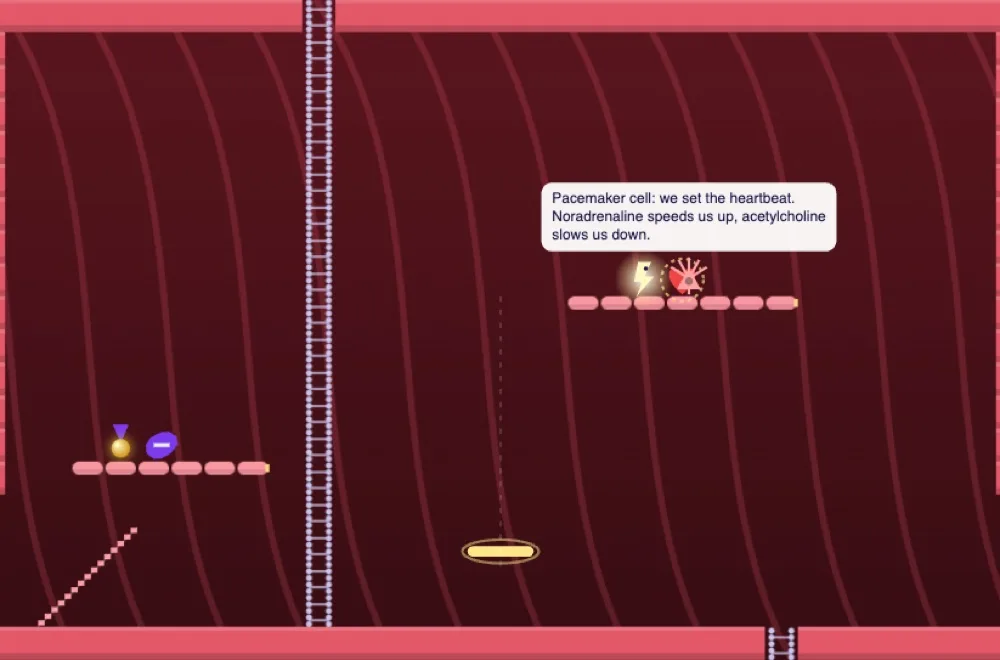
Nerve Runner: Impulse Express
A Saturday morning in Alex's nervous system: 17 screens from the brain to the fingertips, five jobs to do in any order, eight Nobel medals to find and take to the Nobel banquet, and two puzzles to solve.
PlatformExploringQuizzes and puzzlesFrom age 8
Play →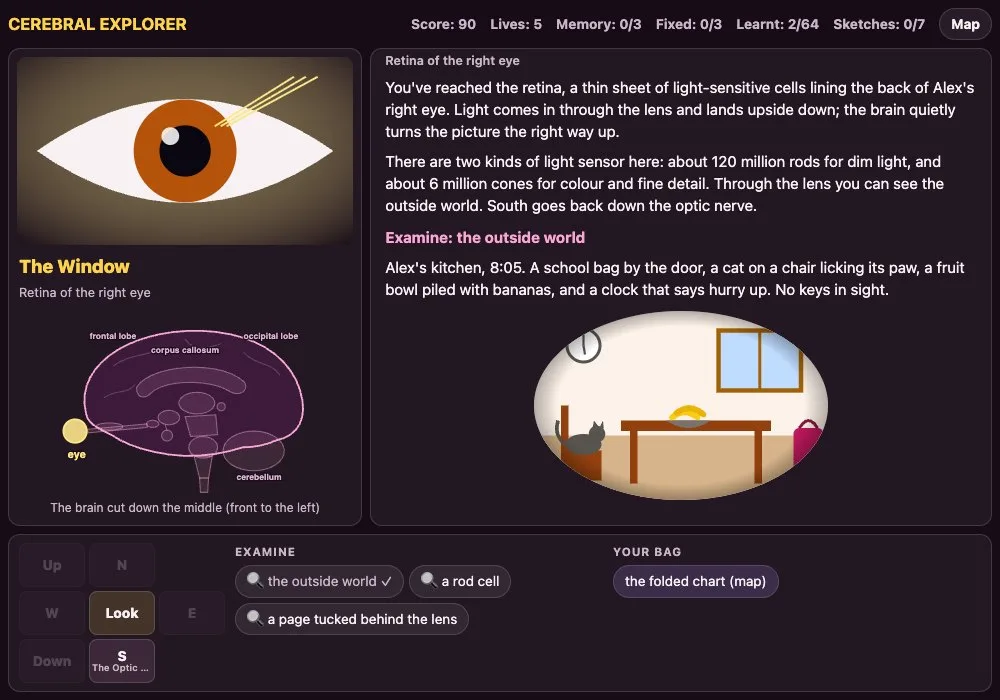
Cerebral Explorer: Memory Quest
A text adventure without typing, inside the brain: explore 36 places from the brainstem to the cortex, learn how the senses work, and rebuild the memory of the lost house keys.
ExploringStrategyQuizzes and puzzlesTake your timeFrom age 10
Play →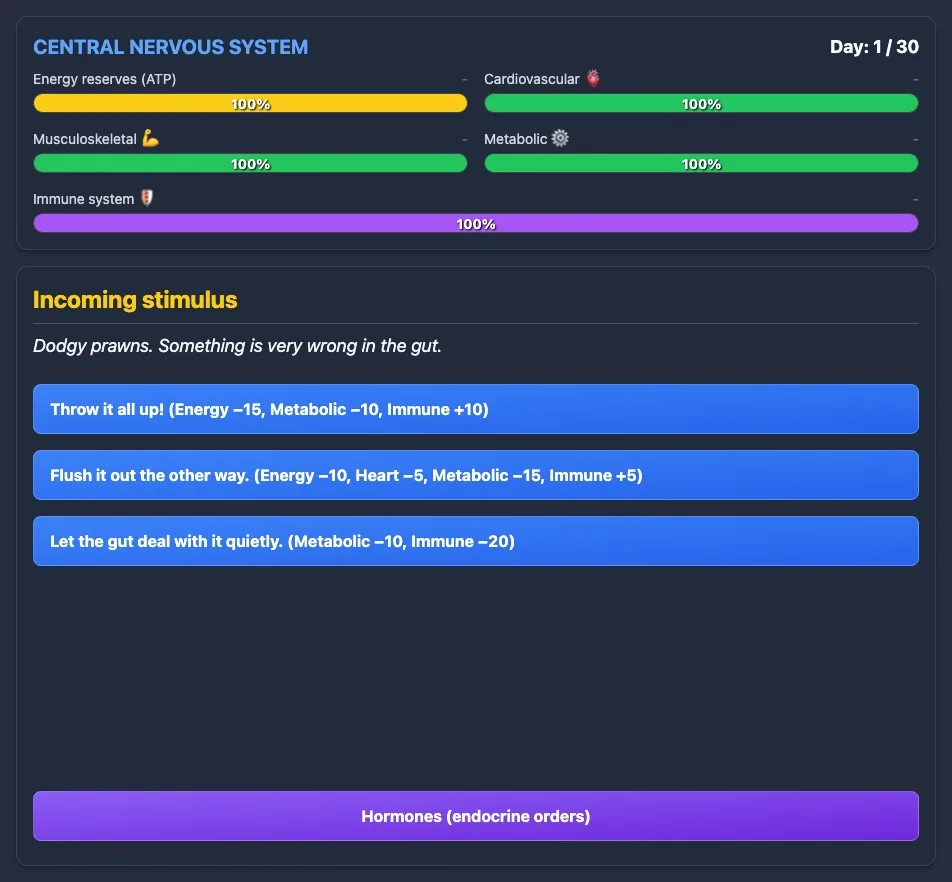
Homeostasis: Central Command
You're the brain of a human who skips sleep, eats fast food and misses lunch. Keep the body in balance for 30 days.
StrategyTake your timeFrom age 10
Play →The lab
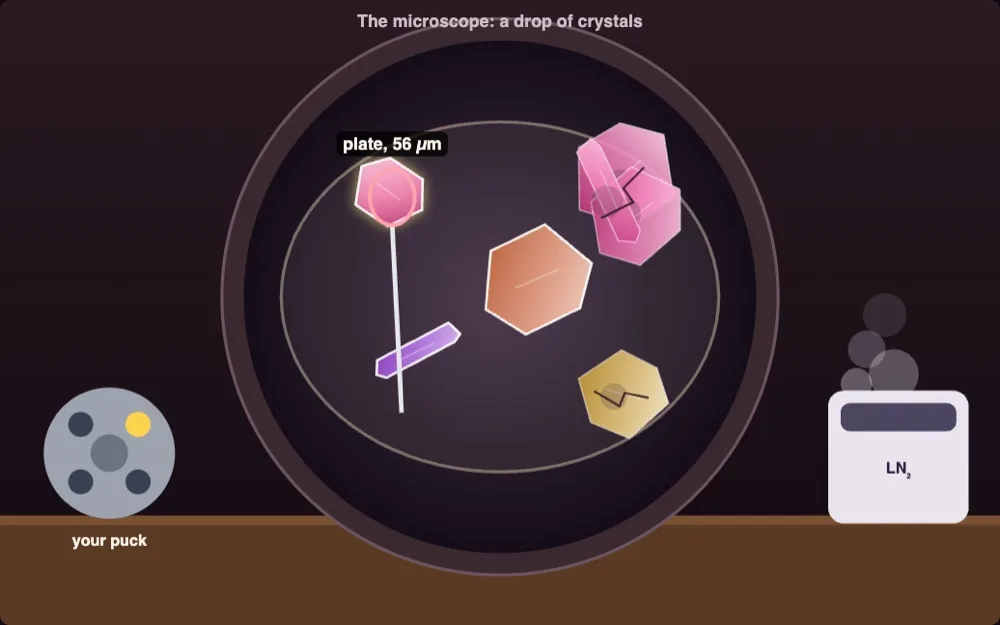
Where we see molecules like these: a shift on a beamline, solving their structures.
The LOAD ZX Spectrum museum in Cantanhede, just down the road from Pocariça, where I spent most of my childhood, calls itself the world's first museum devoted to the Spectrum. If you're ever in central Portugal, it's well worth a visit: much of the collection is in working order, so you can sit down and use the machines. If you can't get there, its website has plenty to explore from home: a virtual tour, a digital archive (in Portuguese), videos, and pages on the history of Sinclair and of Timex, which made computers in Portugal. The website is in English, Portuguese and Spanish.
The games' code is under the MIT licence, and their text and science notes under CC BY 4.0. You're welcome to use them in teaching: please credit “BioGames by David Aragão” and link to this page. Licence details. The music, ZX Spectrum-style tunes written as code with AI help, is under CC BY 4.0 too.